
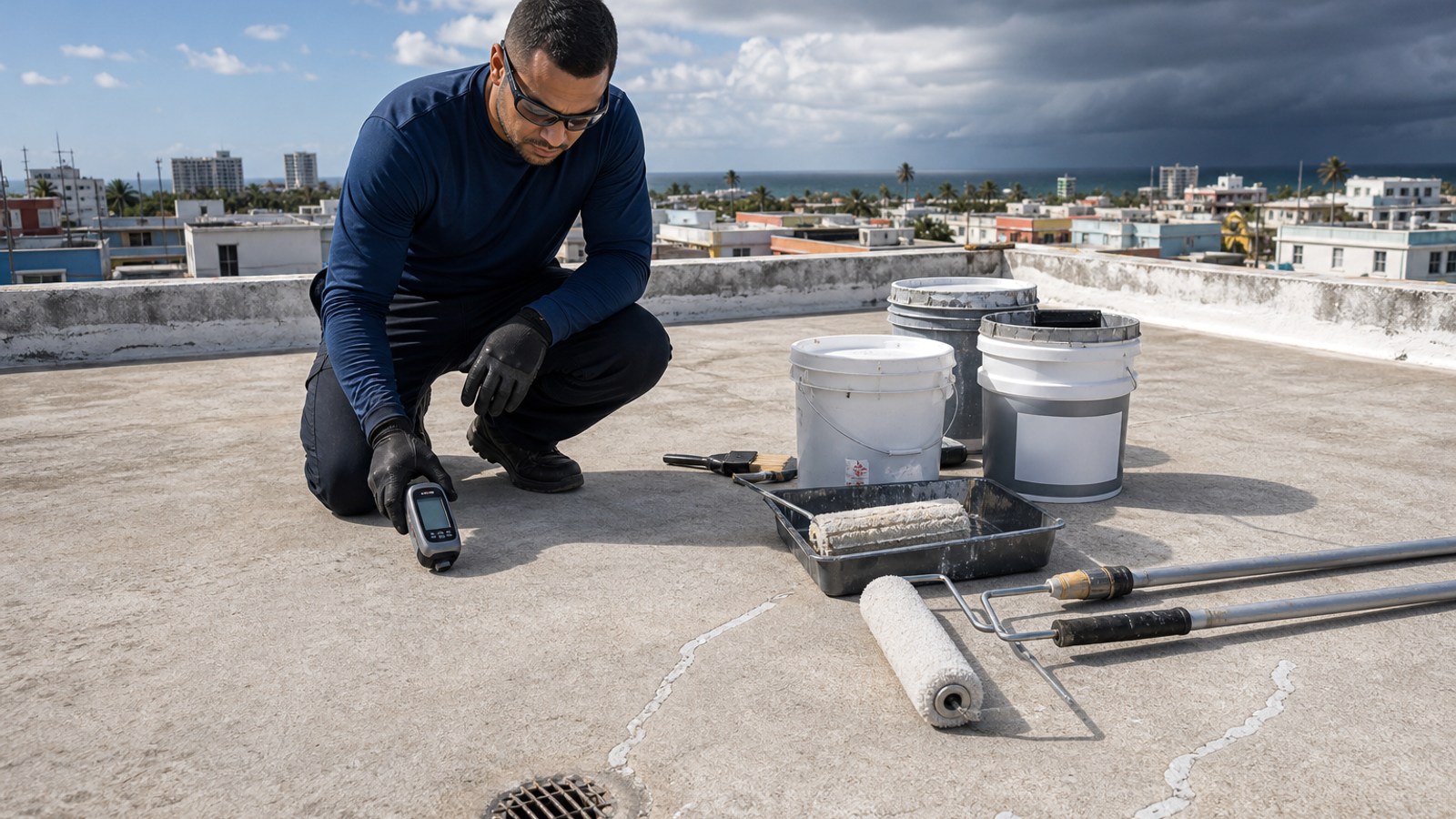
A roof coating cannot correct poor preparation
In Puerto Rico, concrete roofs live through intense sun, sudden downpours, humidity, airborne salt, and long wet periods. Owners often begin thinking about sealing when a stain appears inside or rainy season is already underway. By then, the job may require more than applying a new white coating.
A successful roof-sealing project begins with diagnosis. The contractor should understand where water moves, where it remains, how the existing system is bonded, and which cracks or penetrations require separate treatment. The product on top matters, but the condition underneath determines whether that product can perform.
Drainage comes before coating
Standing water is one of the clearest warning signs on a flat roof. Drains and scuppers should be open, securely detailed, and positioned so water can leave the surface. Leaves, construction debris, algae, and old loose coating can slow drainage. Low areas may reveal a slope issue that another layer of sealant will not solve.
Look closely at parapet walls, equipment bases, pipe penetrations, solar mounts, air-conditioning supports, and transitions between old and newer work. These details interrupt the field of the roof and often experience movement. They deserve specific preparation rather than a quick pass with a roller.
The surface must be clean, sound, and genuinely dry
Pressure washing may be part of preparation, but the objective is not simply a brighter roof. Loose material, chalking, biological buildup, dirt, and contamination must be removed without damaging the concrete or forcing water into vulnerable areas. After cleaning, the roof needs enough time to dry—not just on the surface, but within the conditions allowed by the selected system.
Moisture trapped beneath a coating can lead to bubbles, poor adhesion, and premature failure. Puerto Rico’s weather makes timing difficult, which is why the application window matters. A responsible crew watches recent rain, overnight humidity, surface temperature, forecast conditions, and the product’s curing requirements.
Cracks and previous repairs tell a story
Not every crack is the same. Hairline surface checking, movement at a joint, and an active structural concern require different responses. A maintenance contractor should identify what falls within the sealing scope and where a roofing specialist, engineer, electrician, or other qualified professional is needed.
Old patchwork also deserves attention. Incompatible materials, thick edges, poorly bonded mesh, or repairs applied over dirt can create weak transitions. Covering them may improve appearance for a short time while leaving the failure underneath.
Ask for clarity before work starts
A useful proposal should state what cleaning and preparation are included, which cracks and penetrations will be treated, what product system is proposed, how many coats are planned, and what conditions could change the schedule. Owners should also understand which drainage or substrate problems are outside a maintenance coating’s capability.
Roof sealing is not a race to the whitest finish. It is a sequence of inspection, preparation, compatible materials, correct application, and follow-up. C. Mendez approaches roof protection with that sequence in mind, helping Puerto Rico owners make practical decisions before the next stretch of heavy Caribbean rain.
Un revestimiento no corrige una mala preparación
Los techos de concreto en Puerto Rico reciben sol intenso, aguaceros repentinos, humedad y, cerca de la costa, salitre. Cuando aparece una mancha interior, aplicar otra capa blanca sin diagnóstico puede ocultar el problema.
El trabajo debe comenzar entendiendo cómo se mueve el agua, dónde se acumula, qué tan bien está adherido el sistema existente y cuáles grietas o penetraciones necesitan tratamiento especial.
El drenaje va antes del sellado
Los drenajes y desagües deben estar libres y correctamente detallados. Hojas, algas, escombros y capas viejas pueden frenar la salida del agua, mientras que las áreas bajas pueden revelar un problema de pendiente.
Parapetos, bases de equipos, tuberías, soportes solares y transiciones entre trabajos viejos y nuevos merecen preparación específica.
La superficie debe estar limpia, firme y realmente seca
La limpieza busca retirar material suelto, tizado y contaminación sin dañar el concreto. Luego hay que respetar el tiempo de secado del sistema, no solo esperar que la superficie parezca seca.
La humedad atrapada puede causar burbujas y fallas de adhesión. Por eso se consideran la lluvia reciente, humedad nocturna, temperatura y pronóstico antes de aplicar.
Las grietas y reparaciones anteriores cuentan una historia
No todas las grietas son iguales. Hay que distinguir entre fisuras superficiales, movimiento en juntas y asuntos que requieren un profesional especializado. Los parchos incompatibles o mal adheridos tampoco deben cubrirse sin evaluación.
Pida claridad antes de comenzar
Una propuesta útil explica la preparación, tratamiento de grietas y penetraciones, sistema de producto, número de capas y condiciones que podrían cambiar el calendario.
C. Mendez aborda la protección de techos como una secuencia de inspección, preparación, materiales compatibles, aplicación correcta y seguimiento antes de las lluvias fuertes del Caribe.