
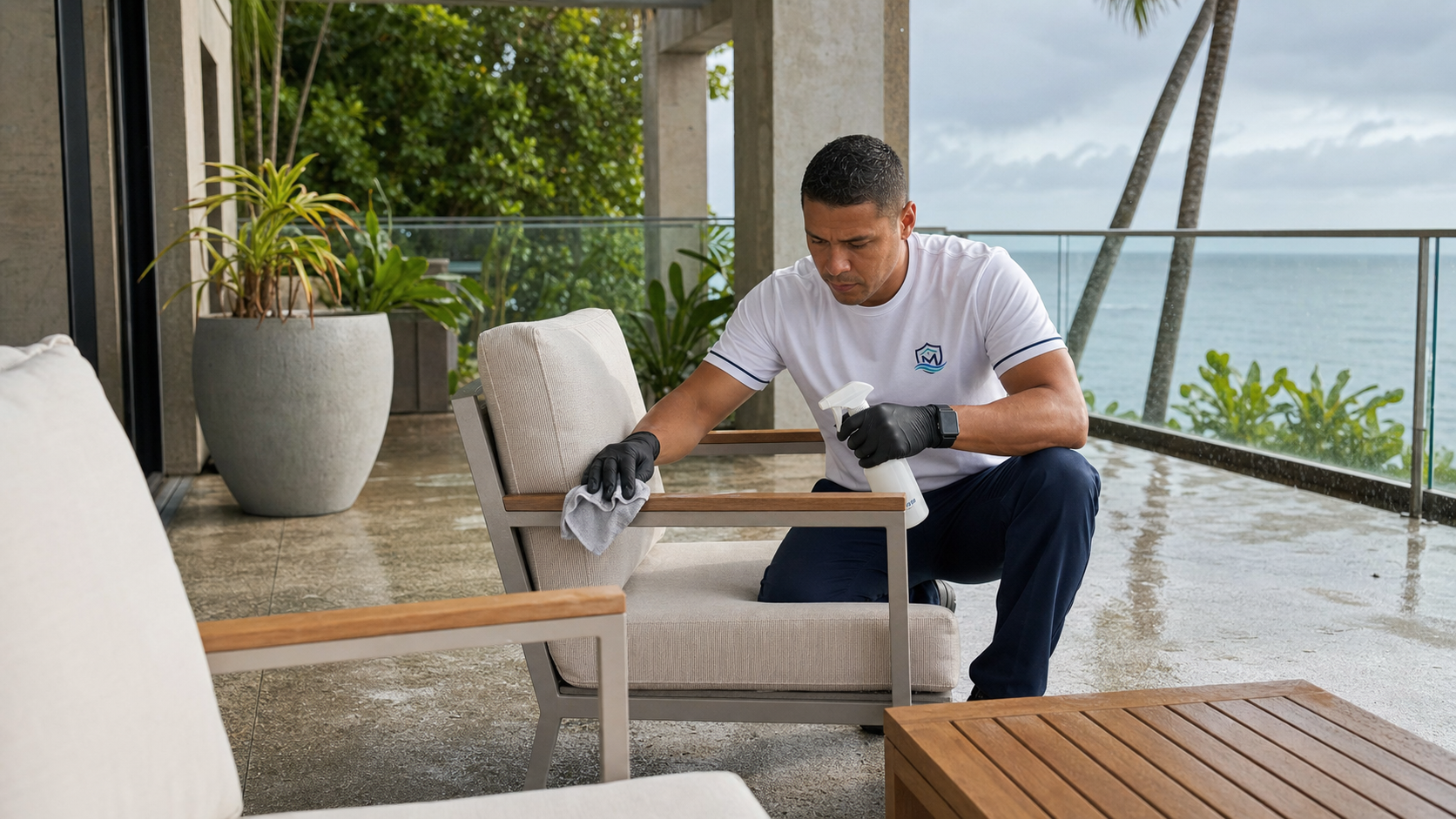
Outdoor rooms work harder in the Caribbean
A terrace in Puerto Rico can move from hard sun to wind-driven rain in the same afternoon. Add salt near the coast, sunscreen, food, pollen, and airborne dust, and outdoor furniture becomes part of the property’s maintenance system.
Good care starts with material identification. Teak, powder-coated aluminum, woven resin, stainless hardware, foam, and performance fabrics each need a compatible method.
Drying is as important as cleaning
Cushions that look dry on top may hold moisture in seams, piping, and foam. Stand them to drain, open covers when the manufacturer allows it, and avoid returning damp pieces to shaded storage.
Frames also need attention at joints, feet, fasteners, and hidden channels. Trapped water and salt can work where the polished surface still looks perfect.
Protection should match the finish
Avoid universal products that promise to treat every surface. Test first, follow the furniture manufacturer’s care guidance, and choose protectants designed for the exact substrate. Over-application can attract dirt or change sheen.
Covers help only when they fit, breathe appropriately, and go onto clean, dry furniture. A cover placed over moisture can create the environment owners hoped to prevent.
Create a repeatable seasonal rhythm
Rinse and inspect high-exposure pieces regularly, schedule deeper cleaning before buildup becomes embedded, and secure or store loose items well before severe weather approaches.
C. Mendez combines cleaning with observation so owners know which pieces simply need routine care and which need repair, refinishing, or replacement.
Los espacios exteriores trabajan más en el Caribe
Una terraza en Puerto Rico puede pasar de sol intenso a lluvia con viento en una tarde. Cerca de la costa se suman salitre, bloqueador, comida, polen y polvo, por lo que los muebles forman parte del plan de mantenimiento.
El cuidado comienza identificando el material. Teca, aluminio pintado, resina tejida, acero, espuma y telas de exterior requieren métodos compatibles.
Secar es tan importante como limpiar
Un cojín seco por arriba puede retener humedad en costuras, bordes y espuma. Colóquelo para drenar, abra las fundas cuando el fabricante lo permita y no guarde piezas húmedas en lugares sombreados.
Revise también uniones, patas, tornillos y canales escondidos de las estructuras, donde el agua y la sal pueden permanecer aunque la superficie se vea perfecta.
La protección debe corresponder al acabado
Evite productos universales. Pruebe primero, siga las indicaciones del fabricante y use protectores diseñados para el material exacto. Aplicar demasiado puede atraer sucio o cambiar el brillo.
Las cubiertas ayudan únicamente si ajustan bien, permiten ventilación y se colocan sobre muebles limpios y secos.
Cree un ritmo estacional repetible
Enjuague e inspeccione regularmente las piezas más expuestas, programe limpieza profunda antes de que el residuo se incruste y asegure artículos sueltos con tiempo antes del mal clima.
C. Mendez combina limpieza y observación para que el dueño sepa qué necesita mantenimiento, reparación, restauración o reemplazo.